English
 Español
 Русский
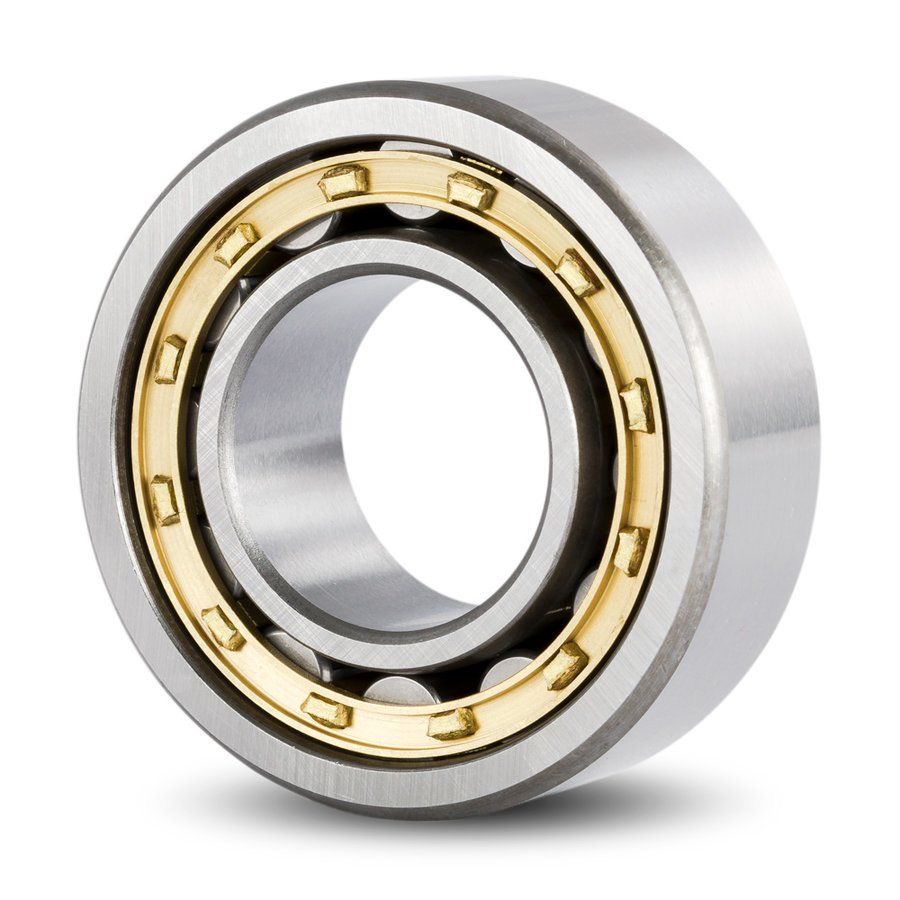
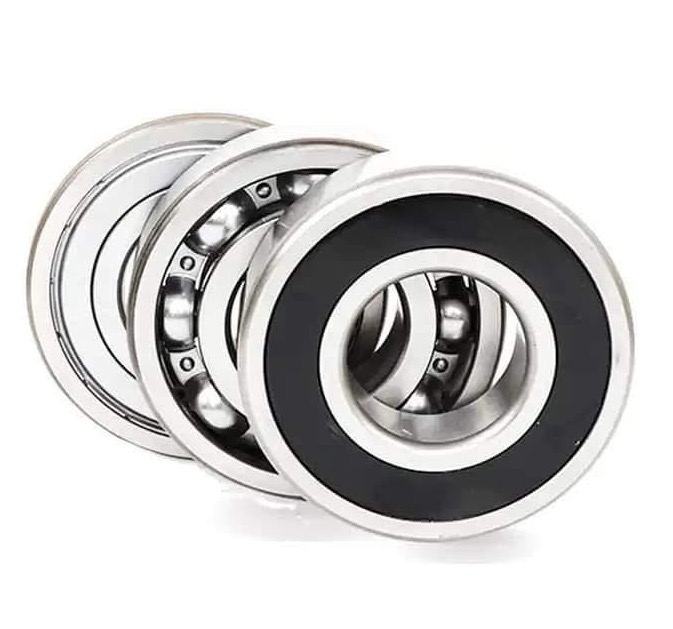
Flat roller bearings are roller bearings with cylindrical rollers that are both thin and long relative to their diameter. These rollers are called needle rollers. Despite their small cross-section, these bearings still have a high load-carrying capacity. Flat roller bearings are equipped with thin and long rollers (roller diameter D≤5mm, L/D≥2.5, where L is the roller length), resulting in a compact radial structure. With the same inner diameter and load capacity as other types of bearings, their outer diameter is small, making them particularly suitable for support structures where radial installation dimensions are limited.
Depending on the application, bearings without inner rings or needle roller and cage assemblies can be selected. In this case, the journal surface and housing bore surface directly serve as the inner and outer rolling surfaces of the bearing. To ensure the same load capacity and operating performance as bearings with rings, the hardness, machining accuracy, and surface quality of the raceway surface of the shaft or housing bore should be similar to those of the bearing rings. This type of bearing can only withstand radial loads.
Overheating of bearings used in mechanical equipment, such as abnormal "overheating," is a common and dangerous malfunction. The cause is often unclear, and improper handling can lead to wasted effort, shorten the lifespan of needle roller bearings, increase maintenance costs, and even cause bearing burnout. The selection of bearing fit should be determined based on the bearing type and size, the magnitude and direction of the load, and the nature of the load. A correctly selected bearing fit should ensure normal bearing operation and prevent relative rotation between the inner ring and the shaft, or between the outer ring and the housing bore, during operation.
Generally speaking, when the direction of the working load remains constant, the rotating ring should have a tighter fit than the stationary ring because the rotating ring bears the rotational load, while the stationary ring bears the localized load. Higher speeds, larger loads, and more intense vibrations require a tighter fit. A tighter fit should also be used when the bearing is mounted on a thin-walled housing or a hollow shaft. However, an excessively tight fit is detrimental. The elastic expansion of the inner and outer rings and the contraction of the outer ring can reduce or even eliminate the internal clearance of the bearing. Irregular shapes or uneven rigidity of the mating shaft and housing surfaces can also cause irregular deformation of the inner and outer rings, all of which will disrupt the normal operation of the bearing.
An excessively tight fit also makes assembly and disassembly difficult, especially for heavy machinery. With the introduction of adaptive control technology in modern high-precision grinding machines and lathes, operating parameters are automatically adjusted according to changes in cutting conditions, allowing the bearing to maintain optimal operating conditions during machining. This results in higher machining accuracy and lower surface roughness, while also improving bearing life and reducing bearing noise.