English
 Español
 Русский
Bearing usage factors mainly refer to whether the installation, adjustment, use, maintenance, and repair meet technical requirements. According to the technical requirements for the installation, use, maintenance, and repair of INA imported bearings, the load, speed, operating temperature, vibration, noise, and lubrication conditions of the operating INA imported bearings are monitored and inspected. Any abnormalities are immediately investigated and adjusted to restore normal operation. Installation conditions are one of the primary usage factors. Improper installation often leads to changes in the stress state between the various parts of the bearing assembly, causing the bearing to operate under abnormal conditions and prematurely end its service life. Internal factors mainly refer to the three major factors that determine bearing quality: structural design, manufacturing process, and material quality.
1. Bearing Clearance Selection: When purchasing bearings, users usually only specify the model and grade, rarely specifying the bearing clearance. Sales personnel must inquire about the usage conditions of the INA imported bearings. The speed, temperature, and fit tolerances of the INA imported bearings directly affect the selection of the bearing clearance. Generally, motors with speeds below 3500 rpm mostly use CM clearance, while high-temperature, high-speed motors require relatively larger clearances. Bearing clearance decreases after assembly due to the expansion of the inner bore and the contraction of the outer diameter. The reduction in clearance is equal to the interference fit multiplied by 60% (except for bearings with aluminum housings). For example, if the bearing clearance is 0.01mm before assembly and the interference fit is 0.01mm during assembly, the clearance after assembly will be 0.004mm. Theoretically, bearings achieve optimal noise and lifespan at zero clearance. However, considering factors such as temperature rise during actual operation, a clearance of 0.002mm-0.004mm after assembly is preferable.
2. Grease Selection: Grease selection is generally based on the INA imported bearing's speed, temperature resistance, noise requirements, and starting torque. Sales personnel must have a thorough understanding of the performance of various greases.
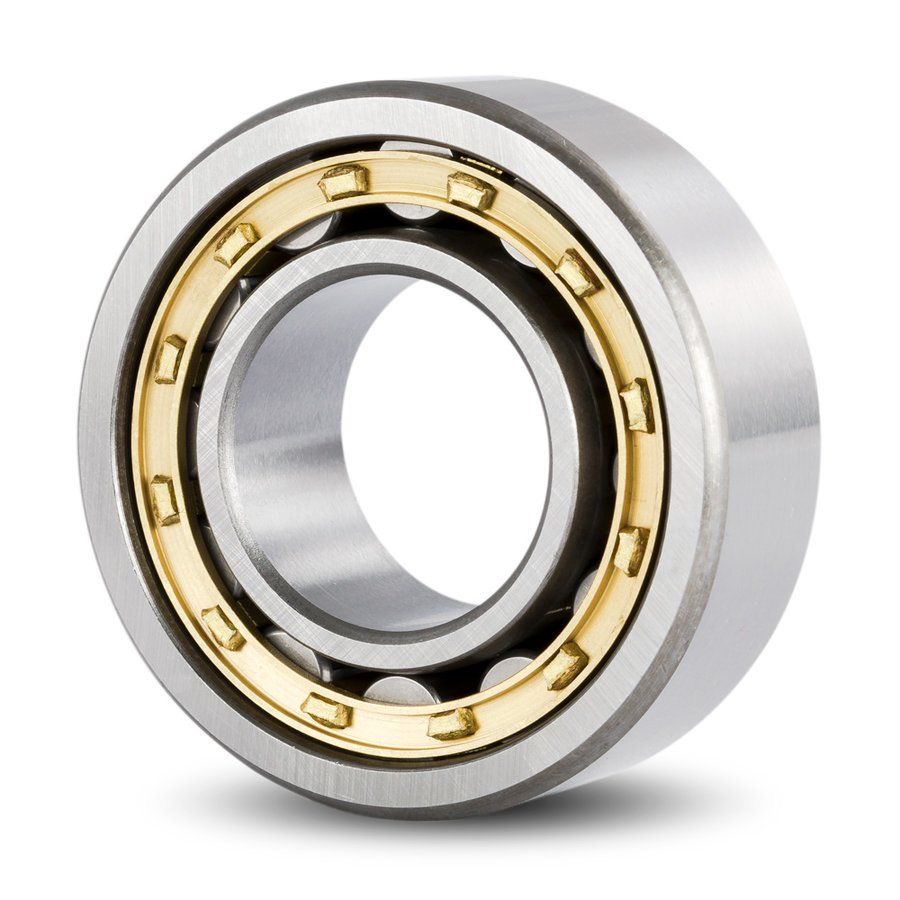
3. Bearing Model Selection: The bearing model is generally selected by the user's technical personnel based on the operating conditions and load of the compatible products. Sales personnel primarily assess whether the user's actual load matches the selected bearing. If the cylindrical roller bearing does not meet the requirements, they should promptly advise the customer to choose a different model. However, unless it's a special product, there are generally no issues with model selection.
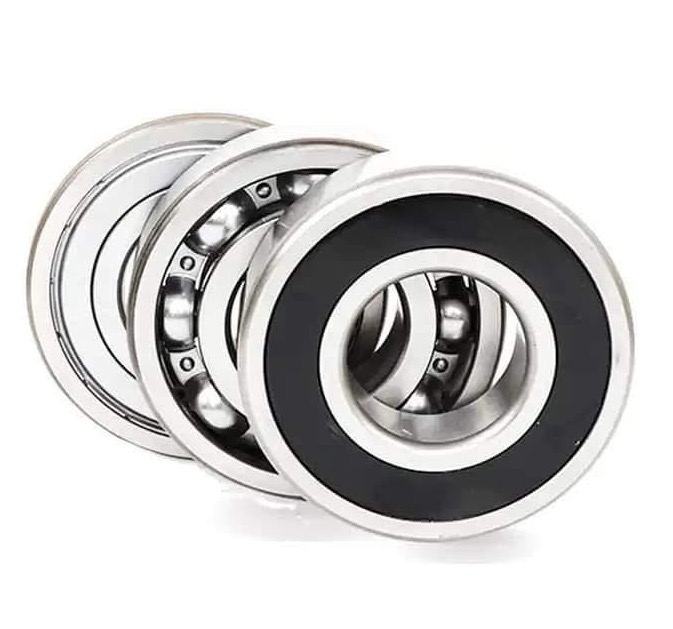
4. Bearing Seal Type Selection: INA imported bearings can be lubricated with oil or grease. Oil-lubricated bearings generally use standard bearings, while grease-lubricated INA imported bearings typically use dust covers or rubber seals. Dust covers are suitable for high-temperature or harsh environments. Seals are divided into contact and non-contact seals. Contact seals offer better dust protection but have a higher starting torque, while non-contact seals have a lower starting torque but less effective sealing performance.
Bearing Removal: INA imported bearings are mounted at the root of the steering knuckle shaft, making them relatively difficult to remove, mainly due to operational inconvenience. However, a special puller can be used to easily remove them. To remove the inner bearing, place the two semi-conical inner sleeves of the pull tool onto the inner bearing, tighten the fastening bolts, and then use the pull ring to secure the sleeves, preventing them from opening. Then, rotate the handle until the screw is fully against the center hole at the steering knuckle end. Continue rotating the handle clockwise to pull out the inner bearing.
Using an old leaf spring for removal: Cut two holes slightly larger than the diameter of the tire nuts on an old leaf spring of suitable length, aligned with the center distance between the tire nuts. With the concave side of the leaf spring facing outwards, screw the nut flush with the end of the steering knuckle to protect the threads. Place a shim of appropriate thickness between the leaf spring and the steering knuckle, and simultaneously tighten the two tire nuts pressing on the leaf spring. The elasticity of the leaf spring will pull the loosely tightened rolling mill bearing outwards. If the bearing still cannot be removed, hammer the center of the leaf spring several times to generate vibration, then tighten the nut.
1. Before disassembly, clarify the relationship between the INA imported bearing and its associated components: Carefully observe the bearing's location and its relationship with the associated components, analyze the installation process and methods, and then formulate a disassembly method and procedure.
2. Avoid disassembly whenever possible: Separated bearings typically have interference fits between their inner and outer rings. To ensure the accuracy of the fit and shorten the repair period, avoid disassembly whenever possible.
3. Use scientific disassembly methods:
(1) When disassembling the journal, apply force to the inner ring. When disassembling a rolling mill bearing on a bearing housing, apply force to the inner ring.
(2) When disassembling the inner or outer ring of the bearing, the force should be balanced and even, and should not be skewed to prevent jamming.
(3) When disassembling INA imported bearings, do not use broken objects to strike them. Use pressure or specialized disassembly tools. In some cases, a copper rod or other soft metal pads can be used for striking.