English
 Español
 Русский
I. Basic Structural Components of a Bearing
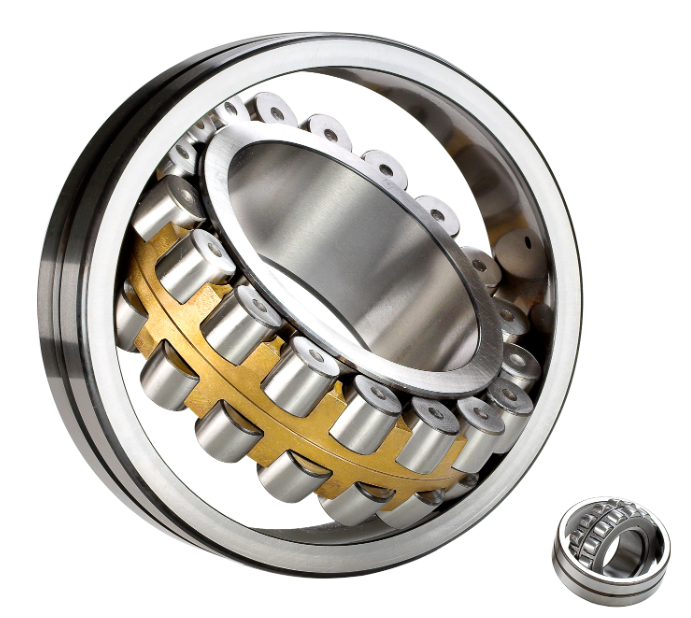
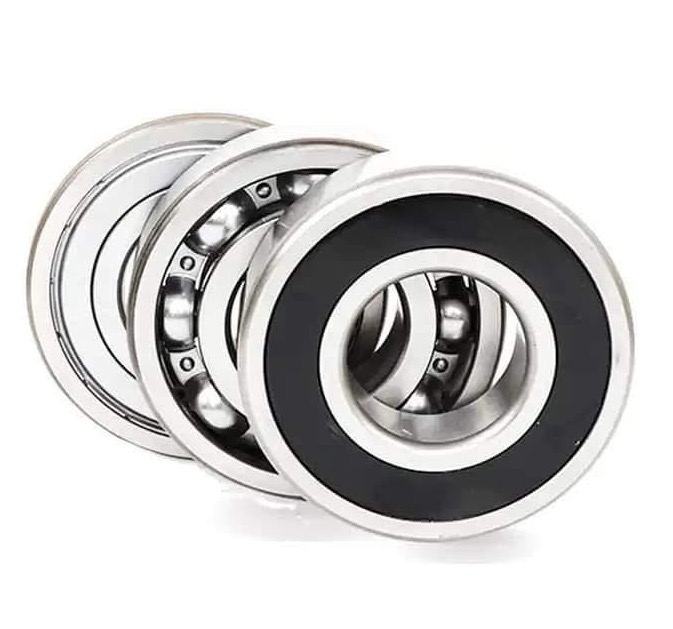
Basic components of a bearing: inner ring, outer ring, rolling elements, and cage.
Inner ring: Usually fits tightly with the shaft and rotates together.
Outer ring: Usually transition fits with the bearing housing and mainly provides support.
The material for both inner and outer rings is bearing steel GCr15, with a hardness of HRC60~64 after heat treatment.
Rolling elements: Arranged evenly in the grooves of the inner and outer rings by means of the cage. Their shape, size, and number directly affect the bearing's load-bearing capacity and performance.
Cage: In addition to evenly separating the rolling elements, it also guides the rotation of the rolling elements and effectively improves the internal lubrication performance of the bearing.
Steel balls: Generally made of bearing steel GCr15, with a hardness of HRC61~66 after heat treatment. Precision grades are classified into ten levels, from highest to lowest, based on dimensional tolerances, form tolerances, gauge values, and surface roughness: G (3, 5, 10, 16, 20, 24, 28, 40, 60, 100, 200).
In addition, there are auxiliary structures for bearings:
Dust covers (sealing rings): prevent foreign objects from entering the bearing.
Grease: lubricates, reduces vibration and noise, absorbs frictional heat, and increases bearing lifespan.
II. Bearing Classification
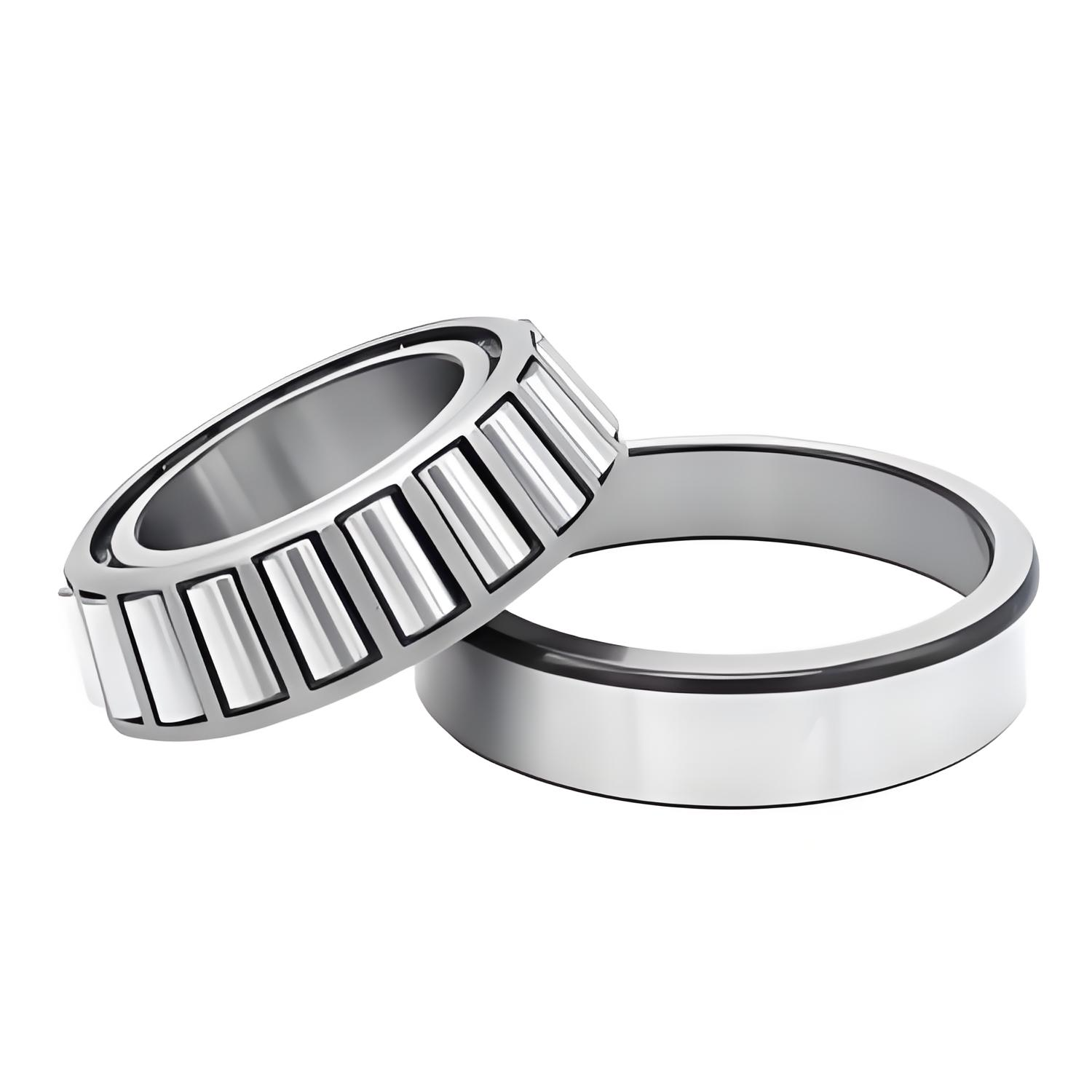
Based on the different frictional properties of the moving elements, bearings can be divided into two main categories: rolling bearings and thrust ball bearings. Common rolling bearings include deep groove ball bearings, cylindrical roller bearings, and thrust ball bearings.
Deep groove ball bearings primarily bear radial loads, but can also bear both radial and axial loads. When bearing only radial loads, the contact angle is zero. When a deep groove ball bearing has excessive radial clearance, it exhibits the performance of an angular contact bearing, can withstand excessive axial loads, has a low coefficient of friction, and a high limiting rotational speed.
Deep groove ball bearings are the most iconic type of rolling bearing, with a wide range of applications. They are suitable for high-speed and even extremely high-speed operation, and are very durable, requiring minimal maintenance. These bearings have a low coefficient of friction, high limiting speed, simple structure, low manufacturing cost, and are easy to manufacture with high precision. They come in a variety of sizes and shapes, and are used in precision instruments, low-noise motors, automobiles, motorcycles, and general machinery, making them one of the most widely used types of bearings in mechanical engineering. They primarily bear radial loads, but can also withstand a certain amount of axial load.
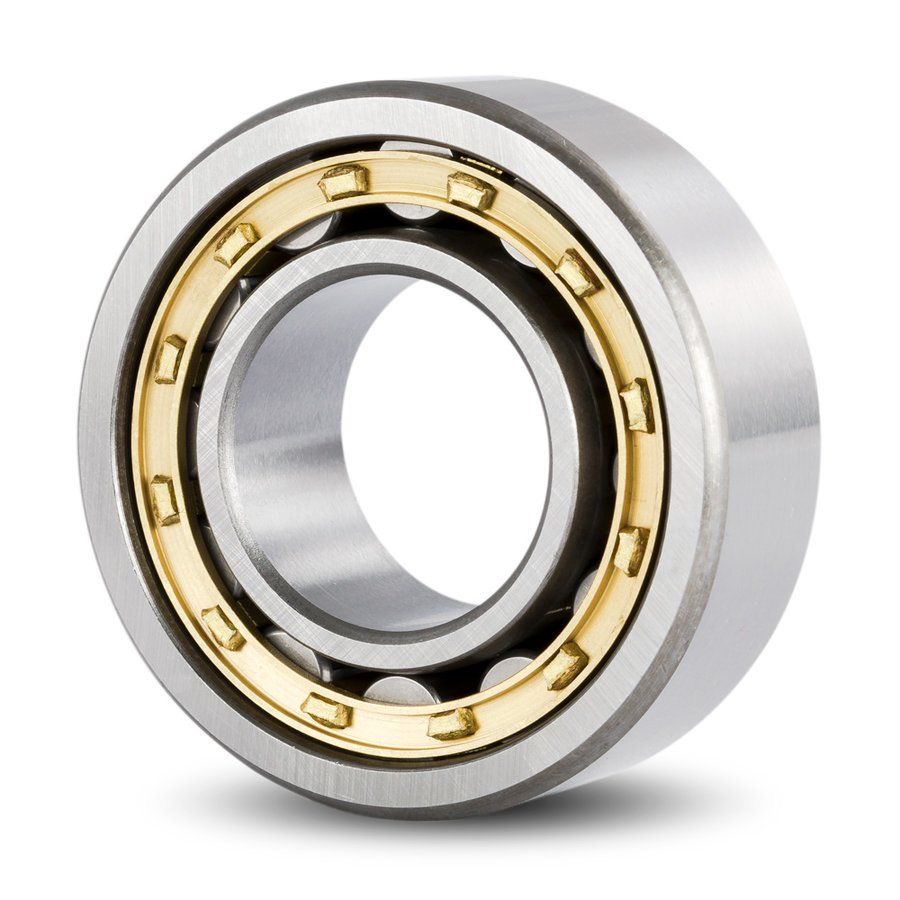
Cylindrical roller bearings are radial rolling bearings where the rolling elements are cylindrical rollers. The cylindrical roller bearing has line contact with the raceway. They have a high load capacity, primarily bearing radial loads. Friction between the rolling elements and the raceway flanges is relatively low, making them suitable for high-speed operation. Depending on whether the raceways have flanges, they can be classified as single-row bearings (NU, NJ, NUP, N, NF, etc.) and double-row bearings (NNU, NN, etc.).
Cylindrical roller bearings with no flanges on the inner or outer rings allow for axial relative movement between the inner and outer rings, thus enabling their use as free-end bearings. Cylindrical roller bearings with double flanges on one side of the inner or outer ring and a single flange on the other side can withstand a certain degree of axial load in the same direction. They typically use stamped steel cages or machined solid brass cages. However, some also use molded polyamide cages.
Thrust ball bearings are designed to withstand thrust loads at high speeds and consist of washer-shaped raceways with ball-rolling grooves. Because the raceways are seat-shaped, thrust ball bearings are divided into two types: flat-base and self-aligning spherical-base. Furthermore, these bearings can withstand axial loads but not radial loads.
Thrust ball bearings consist of three parts: the housing ring, the shaft ring, and the ball cage assembly. The part that mates with the shaft is called the shaft ring, and the part that mates with the housing is called the housing ring. Thrust ball bearings are only suitable for components that bear a partial axial load and operate at low speeds, such as crane hooks, vertical water pumps, vertical centrifuges, jacks, and low-speed reducers. The bearing's shaft ring, housing ring, and rolling elements are separate and can be assembled and disassembled individually.
III. Rolling Bearing Life
(1) Main Failure Modes of Rolling Bearings
Fatigue Spalling: In rolling bearings, the contact surfaces (raceways or rolling element surfaces) that bear the load and move relative to each other, due to continuous load bearing, first develop cracks at the corresponding depth below the surface in the weaker parts, which then develop to the contact surface, causing the surface metal layer to peel off in flakes, preventing the bearing from operating normally. This phenomenon is called fatigue spalling. Fatigue spalling of rolling bearings is ultimately unavoidable. In fact, under normal installation, lubrication, and sealing conditions, most bearing failures are fatigue failures. Therefore, the bearing life usually referred to is the fatigue life of the bearing. Plastic Deformation (***Deformation): When a rolling bearing is subjected to excessive load, plastic deformation occurs at the contact point between the rolling elements and raceways, resulting in indentations on the raceway surface. This causes severe vibration and noise during bearing operation. In addition, foreign objects or hard particles entering the bearing, excessive impact loads, or machine vibration when the bearing is stationary can all cause indentations on the contact surface.
Wear: Due to the relative motion between the rolling elements and raceways and the intrusion of dirt and dust, wear occurs on the surfaces of the rolling elements and raceways. Significant wear increases bearing clearance, noise, and vibration, reducing the bearing's operational accuracy and directly affecting the accuracy of some main equipment.
IV. Bearing Accuracy Grades and Noise/Clearance Representation Methods
The accuracy of rolling bearings is divided into dimensional accuracy and rotational accuracy. Accuracy grades are standardized and divided into five levels: P0, P6, P5, P4, and P2. Accuracy increases sequentially from grade 0. While grade 0 is usually sufficient, the required accuracy grade varies depending on different conditions or applications.
V. Frequently Asked Bearing Questions
(1) Bearing Steel
Common types of rolling bearing steel: high-carbon chromium bearing steel, carburized bearing steel, corrosion-resistant bearing steel, high-temperature bearing steel
(2) Lubrication after Bearing Installation
Lubrication is divided into three types: grease, lubricating oil, and solid lubricant.
Lubrication enables the bearing to operate normally, avoids contact between the raceway and the rolling element surface, reduces internal friction and wear, and increases the bearing's service life. Grease has excellent adhesion, wear resistance, and temperature resistance, which can improve the oxidation resistance of high-temperature bearings and enhance their service life. Too much grease in the bearing is not advisable; excessive grease can have the opposite effect. The higher the bearing's rotational speed, the greater the damage. Excessive heat during operation can easily damage the bearing due to overheating. Therefore, scientifically filling the bearing with grease is extremely important.
VI. Precautions for Bearing Installation
Before installation, check the bearing for quality issues and correctly select the appropriate installation tools. Pay attention to the cleanliness of the bearing during installation. When tapping, apply force evenly and tap gently. After installation, check that the bearing is properly installed. Remember, do not open the bearing packaging before the preparation work is completed to prevent contamination.