English
 Español
 Русский
Bearings, as crucial components of modern machinery, are widely used. We all have some understanding and knowledge of them, but how much exactly?
Bearing Composition
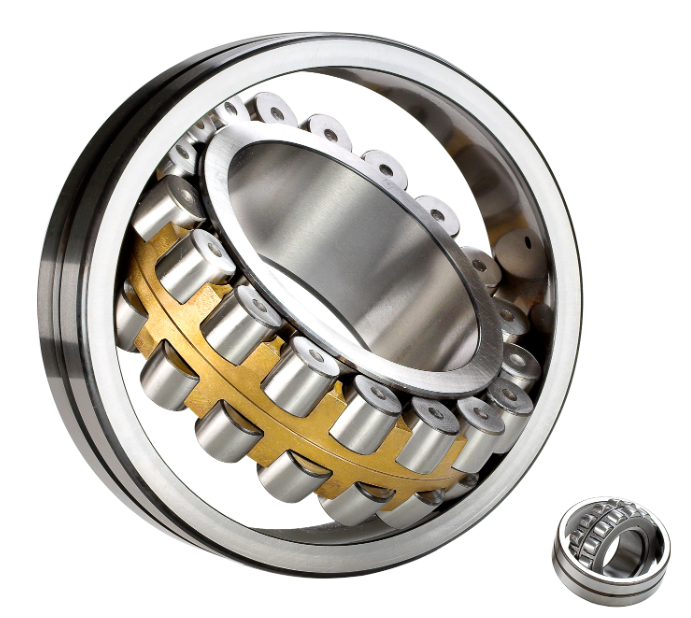
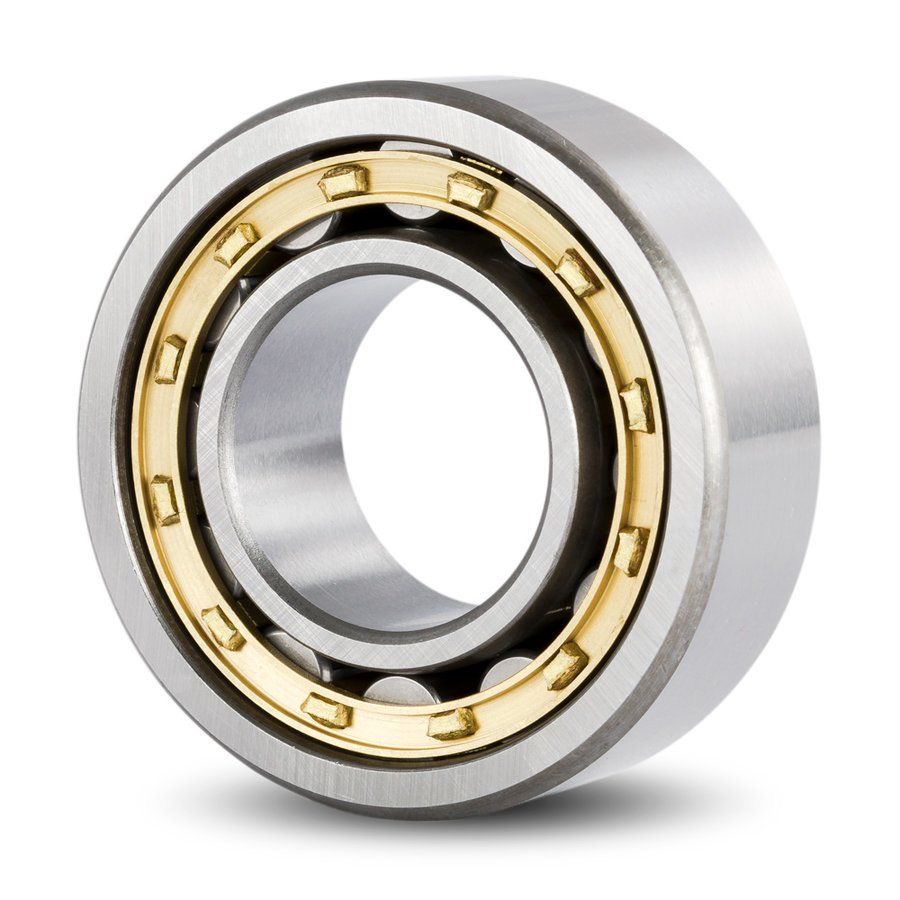
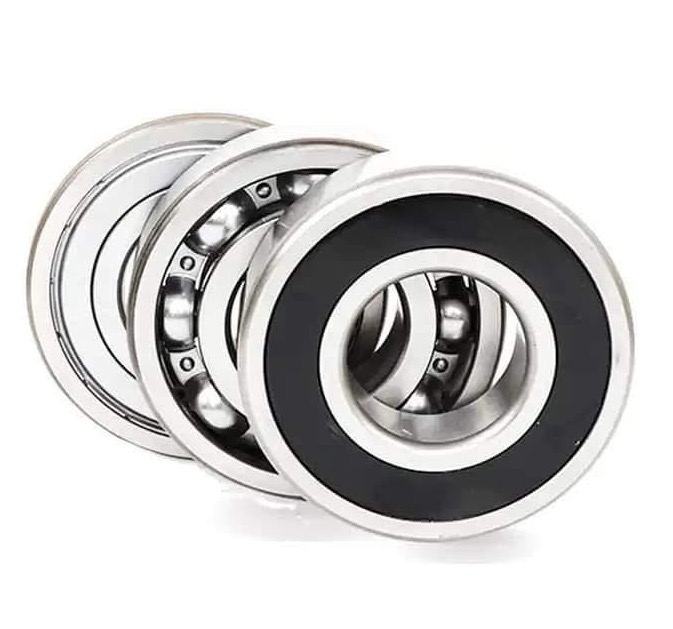
A bearing generally consists of an inner ring, outer ring, rolling elements, and a cage. For sealed bearings, lubricant and seals (or dust covers) are also added. This is the complete composition of a bearing.
Selecting different types of bearings based on their operating conditions is essential to better utilize their function and extend their service life. When selecting bearings, we need to consider the following factors:
· Radial load
· Axial load
· Speed requirements
· Radial runout
· Axial runout
· Operating temperature
· Noise requirements
· Lubrication conditions
Bearing Classification
Bearing Designations
Bearing models generally consist of a prefix, a basic designation, and a suffix. Typically, only the basic designation is used. The basic designation usually includes three parts: type designation, size designation, and inner diameter designation. The suffix uses letters and numbers to indicate the bearing's structure, tolerances, and special material requirements. The prefix is used to indicate the bearing's components, represented by letters.
1. Basic Designation
The basic designation indicates the bearing's inner diameter, diameter series, width series, and type. It is generally a five-digit designation, described below:
(1) The bearing's inner diameter is represented by the first digit from the right of the basic designation.
For bearings with commonly used inner diameters d=20~480mm, the inner diameter is generally a multiple of 5. These two digits represent the quotient obtained by dividing the bearing's inner diameter by 5, such as 04 indicating d=20mm; 12 indicating d=60mm, etc. For bearings with inner diameters of 10mm, 12mm, 15mm, and 17mm, the inner diameter designations are 00, 01, 02, and 03 respectively. For bearings with inner diameters less than 10mm and greater than 500mm, the method of representing the inner diameter is specified separately; refer to GB/T272-93.
(2) The bearing's diameter series (i.e., the series of bearings with the same structure and inner diameter but variations in outer diameter and width) is represented by the third digit from the right of the basic designation. For example, for radial bearings and radial thrust bearings, 0 and 1 represent the extra-light series; 2 represents the light series; 3 represents the medium series; and 4 represents the heavy series. The dimensional comparison between each series is shown in the figure below. Thrust bearings, except that 1 represents the extra-light series, are represented in the same way as radial bearings.
(3) The width series of bearings (i.e., the series of bearings with the same structure, inner diameter, and diameter series but varying widths) is represented by the fourth digit from the right of the basic designation.
When the width series in Figure 13-4 is the 0 series (normal series), the width series designation 0 may be omitted from the designation for most bearings. However, for self-aligning roller bearings and tapered roller bearings, the width series designation 0 should be included. The diameter series designation and the width series designation are collectively referred to as the size series designation.
(4) The bearing type designation is represented by the fifth digit from the right of the basic designation (for cylindrical roller bearings and needle roller bearings, the type designation is a letter).
2. Suffix Designations
Bearing suffix designations use letters and numbers to indicate the bearing's structure, tolerances, and special material requirements. There are many types of suffix designations; some commonly used ones are introduced below.
(1) Internal Structure Designations: These designations indicate different internal structures of the same type of bearing, using a letter immediately following the basic designation. For example, angular contact ball bearings with contact angles of 15°, 25°, and 40° are designated C, AC, and B, respectively, to represent their different internal structures.
(2) Bearing Tolerance Grades: These are divided into six grades: 2, 4, 5, 6, 6X, and 0, from highest to lowest. Their designations are /PZ, /P4, /PS, /P6, /P6X, and /PO, respectively. Grade 6X is only applicable to tapered roller bearings; grade 0 is a standard grade and is not indicated in the bearing designation.
(3) Commonly used bearing radial clearance series are divided into six groups: Group 1, Group 2, Group 0, Group 3, Group 4, and Group 5, with radial clearance increasing sequentially. Group 0 clearance is the most commonly used clearance group and is not indicated in the bearing designation. The other clearance groups are represented by /CI, /CZ, /C3, /C4, and /CS in the bearing designation, respectively.
3. Prefix Codes
The prefix code of a bearing is used to indicate the components of the bearing and is represented by letters. For example, L indicates the separable rings of a separable bearing; K indicates the rolling elements and cage assembly of a bearing, etc.
There are many types of rolling bearings used in actual applications, and the corresponding bearing designations are quite complex. The codes introduced above are the most basic and commonly used parts of bearing designations. Familiarity with these codes allows for the identification and selection of commonly used bearings. For detailed information on the designation methods for rolling bearings, please refer to GB/T 272. Bearing Selection Methods
When selecting bearings, the ease of bearing arrangement, installation, and disassembly within the shaft system, the allowable space and dimensions of the bearing, and the market availability of the bearing are generally considered to roughly determine the bearing structure.
Secondly, the bearing size is determined by comparing and studying the design life of various machines using the bearing and the different durability limits of the bearings.
Furthermore, depending on the application, it is necessary to select bearings with special designs for requirements such as precision, clearance, cage structure, and lubrication. However, there is no fixed order or rule for selecting bearings; priority should be given to considering the required conditions, performance, and related options of the bearing, which is particularly practical.
Bearing Usage Precautions
Rolling bearings are precision components, and their use must be correspondingly cautious. The following precautions should be taken:
(1) Keep the bearing and its surroundings clean.
Even tiny dust particles invisible to the naked eye can have a negative impact on the bearing. Therefore, the surrounding area should be kept clean to prevent dust from entering the bearing.
(2) Use with care.
If the bearing is subjected to a strong impact during use, it will develop scratches and indentations, which can lead to accidents. In severe cases, cracks and breaks may occur, so caution is necessary.
(3) Use appropriate operating tools
Avoid substituting existing tools; appropriate tools must be used.
(4) Be aware of bearing corrosion
Sweat on hands can cause rust when handling bearings. Use clean hands, and ideally wear gloves.
Correct bearing installation method
Before installation, open the packaging. For general grease lubrication, do not clean; simply fill with grease. For oil lubrication, cleaning is usually unnecessary. However, for instrument or high-speed bearings, clean with clean oil to remove the rust inhibitor. Bearings without rust inhibitor are prone to rust, so they should not be left unattended. Furthermore, bearings already sealed with grease should not be used directly without cleaning.
The installation method for bearings varies depending on the bearing structure, fit, and conditions. Generally, since most bearings rotate on a shaft, the inner ring requires an interference fit. Cylindrical bore bearings are often press-fitted or heat-fitted. In cases involving tapered bores, the bearing is directly mounted on the tapered shaft or using a sleeve. When mounting to the housing, a clearance fit is generally used, with an interference fit on the outer ring. It is typically pressed in using a press, or sometimes a shrink-fit method is used after cooling. When dry ice is used as a coolant for shrink-fit installations, moisture in the air will condense on the bearing surface. Therefore, appropriate rust prevention measures are necessary.
Bearing Maintenance Methods
To maintain the bearing's original performance in good condition for as long as possible, maintenance and inspection are necessary to prevent accidents, ensure operational reliability, and improve productivity and economy. Maintenance should be performed regularly according to the operating standards corresponding to the machine's operating conditions. This includes monitoring operating conditions, replenishing or replacing lubricant, and periodic disassembly and inspection. Maintenance items during operation include bearing rotation noise, vibration, temperature, lubricant condition, etc.
Bearing Lubrication
The purpose of lubricating rolling bearings is to reduce internal friction and wear, and prevent burning and sticking. Its lubrication effects are as follows:
(1) Reduced Friction and Wear
At the contact points of the bearing's rings, rolling elements, and cage, lubrication prevents metal-to-metal contact, reducing friction and wear.
(2) Extended Fatigue Life
The rolling fatigue life of a bearing is extended when the rolling contact surfaces are well lubricated during rotation. Conversely, low oil viscosity and poor lubricating film thickness shorten the life.
(3) Dissipation of Frictional Heat and Cooling
Circulating oil supply methods can use oil to dissipate heat generated by friction or heat transferred from the outside, thus cooling the bearing. This prevents overheating and aging of the lubricating oil itself.
(4) Other
It also prevents foreign objects from entering the bearing and prevents rust and corrosion.
Lubrication Methods:
Bearing lubrication methods are divided into grease lubrication and oil lubrication. To ensure the bearing performs optimally, the appropriate lubrication method must first be selected based on the operating conditions and purpose.
Bearing Inspection and Repair Methods
Bearing Cleaning: When disassembling a bearing for inspection, first record its appearance, confirm the amount of residual lubricant, take a sample for testing, and then wash the bearing. Common cleaning agents include cleaning agents and kerosene.
The cleaning of disassembled bearings involves both rough and fine cleaning. Place them in separate containers, first placing a metal mesh at the bottom to prevent the bearing from directly contacting the dirt in the container. During rough cleaning, rotating the bearing with dirt can damage the rolling surfaces; this should be avoided. In the rough cleaning oil, use a brush to remove grease and adhering substances. After it is roughly clean, proceed to fine cleaning. Fine cleaning involves rotating the bearing in the cleaning oil while carefully cleaning it. The cleaning oil should also be kept clean at all times.
Bearing Inspection and Judgment: To determine if a disassembled bearing is usable, it must be inspected after cleaning. Inspect the condition of the raceway surfaces, rolling surfaces, mating surfaces, cage wear, increased bearing clearance, and any damage or abnormalities that cause a decrease in dimensional accuracy.
Bearing Inspection and Judgment For small, non-separable ball bearings, support the inner ring horizontally with one hand and rotate the outer ring to check for smooth rotation.
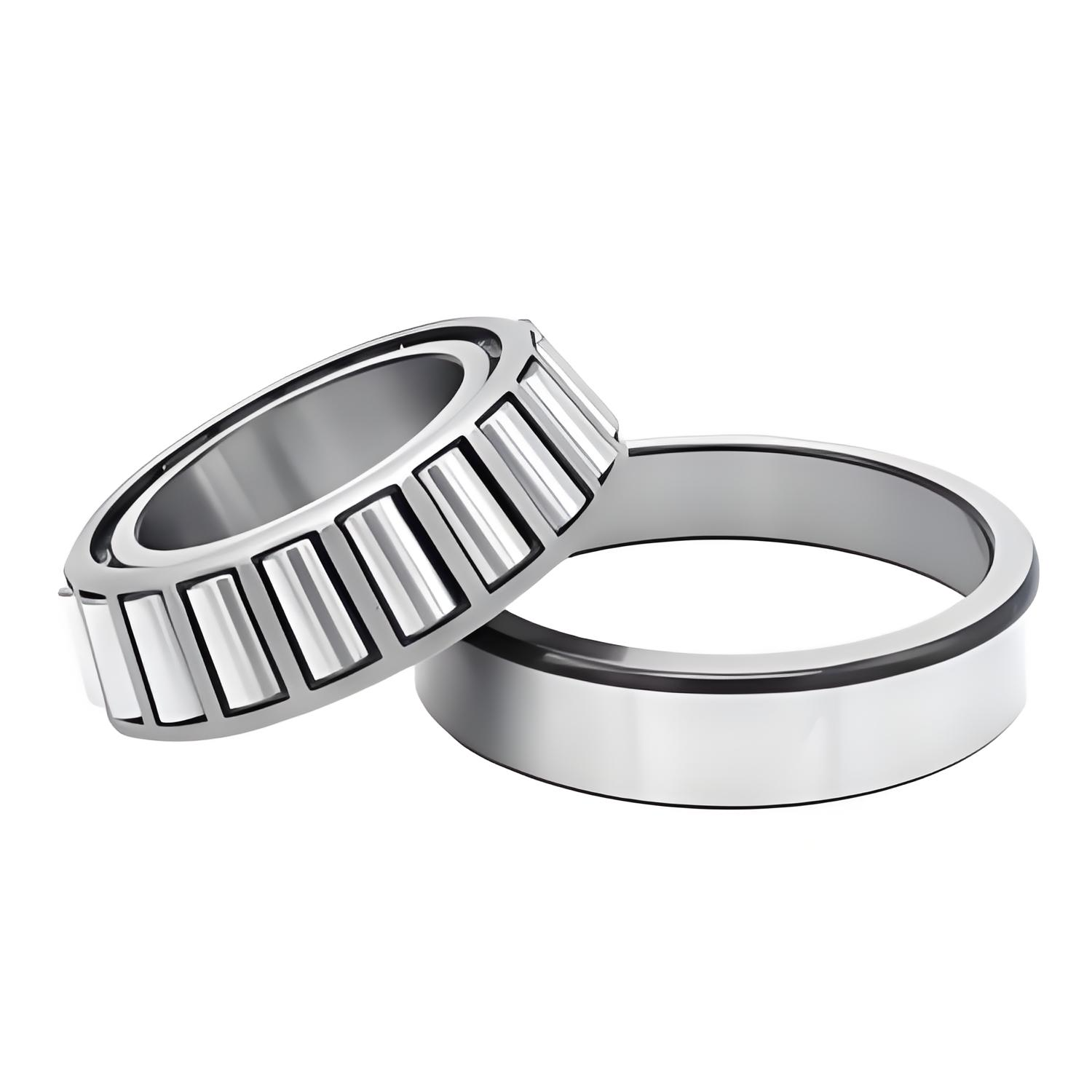
For separable bearings such as tapered roller bearings, the rolling elements and the raceway surfaces of the outer ring can be inspected separately.
Large bearings cannot be rotated by hand; carefully inspect the rolling elements, raceway surfaces, cage, and flange surfaces. The more critical the bearing, the more meticulous the inspection.